
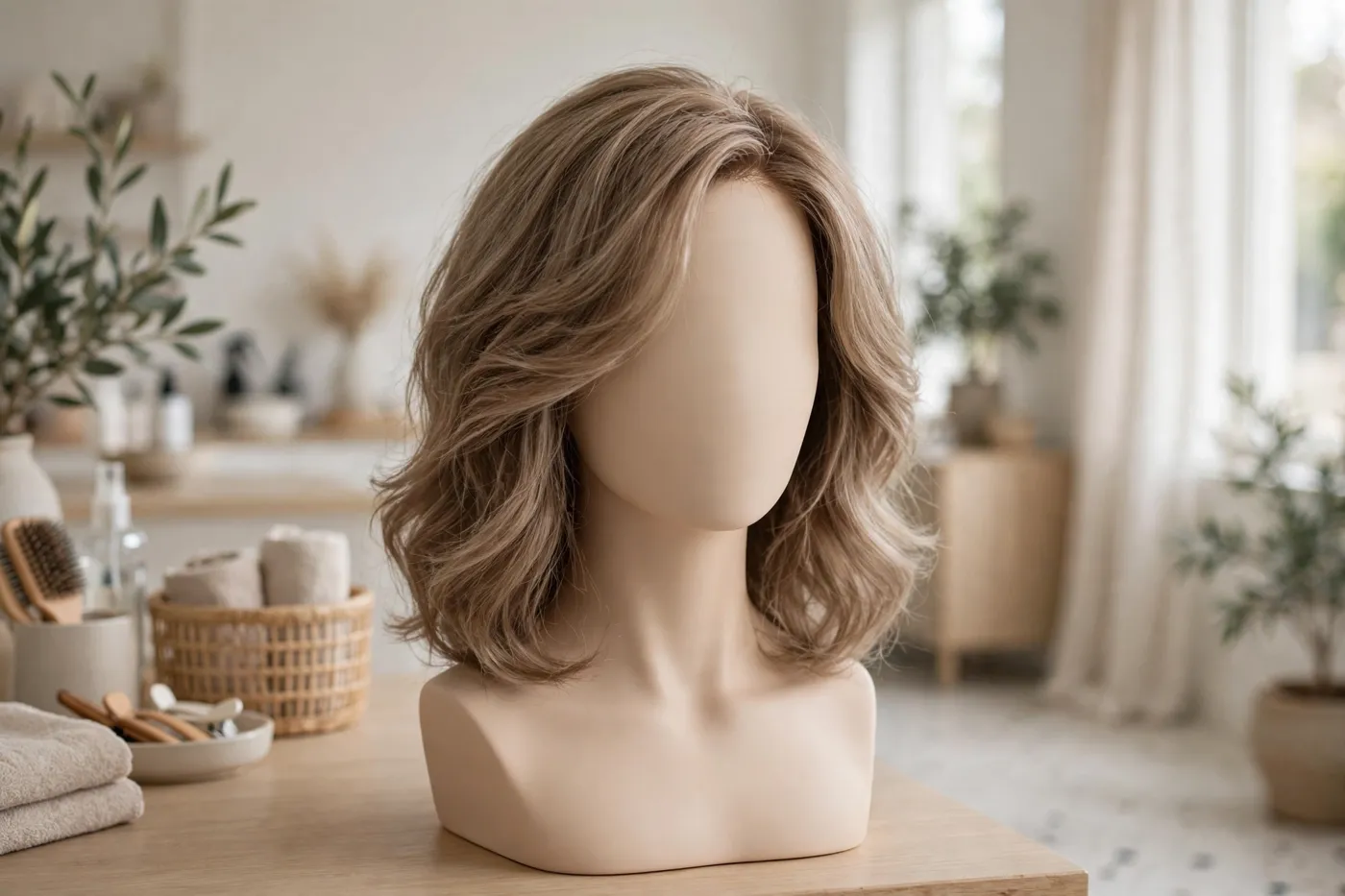
Finding the best wigs for thinning hair starts with understanding what you actually need: coverage where your hair has thinned, a fit that feels secure without pulling, and a look that blends with your own hair. Thinning hair affects women and men of all ages, and the right wig can restore volume and confidence without anyone knowing you are wearing one. This guide explains which wig types work best, how to choose the right cap and density, and what to avoid.
Why Thinning Hair Needs a Different Approach
When hair thins, the scalp shows through more easily, and a wig that is too dense or too heavy can look unnatural and feel uncomfortable. The goal is not maximum hair but believable hair: a density that matches your natural growth, a hairline that looks real, and a cap that sits comfortably over sensitive areas. Women dealing with thinning often find that hair toppers for women are worth considering alongside full wigs, since toppers add coverage exactly where it is needed while blending with your own hair at the sides and back.
If you are new to wigs entirely, start with our best wigs for beginners guide, which covers the basics of cap types, sizing, and first-time fitting. Once you understand the fundamentals, the advice below will help you narrow the choice to styles that suit thinning hair specifically.
Cap Types That Work Best for Thinning Hair
Lace Front Caps
Lace front wigs have a sheer lace panel at the front that creates a natural-looking hairline, which is especially valuable when your own hairline has receded or thinned. The lace melts against the skin, so the hair appears to grow from your scalp rather than sitting on top of it. For thinning hair, a lace front is usually the single most important feature to prioritise.
Monofilament Caps
Monofilament caps have a fine mesh top where each hair is individually tied, allowing you to part the hair in different directions and giving the appearance of natural growth at the parting. This matters when thinning is concentrated at the crown or parting, because a monofilament top hides the scalp far better than a standard wefted cap. Many women find a monofilament cap with a lace front gives the most realistic result overall.
Wefted Caps
Standard wefted caps are lighter, cooler, and more affordable, but they show less scalp coverage at the parting and can look less natural up close. They work well as a second wig for everyday wear or for trying a style before investing in a monofilament piece, but for daily wear with significant thinning, lace front or monofilament is usually the better investment.
Density, Length and Colour
Density describes how much hair a wig has. For thinning hair, light to medium density usually looks most natural, because it matches the volume your hair has now rather than the volume you remember. Very high density wigs can look like a helmet and feel heavy on a sensitive scalp. Length matters too: shorter and medium styles are easier to manage, put less weight on the cap, and tend to look fuller than very long styles, which can appear thin at the ends.
Colour should match your natural shade or go slightly lighter, since very dark colours contrast more with the scalp and can make thinning more visible. If you are unsure, our guide to how to choose a wig covers shade matching in detail, and wigs for round faces helps with choosing a cut that flatters your face shape alongside your coverage needs.
Human Hair or Synthetic?
Human hair wigs look the most natural, can be styled with heat, and last longer with proper care, but they cost more and need more maintenance. Synthetic wigs hold their style, are lighter, and are far more affordable, making them a good first choice while you learn what suits you. For thinning hair, either can work: the cap construction and density matter more than the fibre. Many people keep a synthetic wig for daily wear and a human hair piece for special occasions.
Comfort is the deciding factor for daily wear. A wig that pulls, itches, or slips will not get worn, however good it looks on the stand. Our guide to which wig is more comfortable to wear compares cap designs for all-day comfort, and it is worth reading before you commit to a more expensive piece.
Fitting and Securing a Wig on Thinning Hair
A good fit starts with measuring your head correctly: around the hairline, over the crown, and nape to front. Most wigs come in average size, with petite and large options available, and adjustable straps inside the cap fine-tune the fit. If your own hair is very thin, a wig grip band or a thin stocking cap underneath can stop slipping and protect the scalp, and it also makes the wig feel more secure in wind or during activity.
Avoid adhesives on irritated or very sensitive scalps unless you have tested them first, and give your scalp regular breaks: remove the wig at home when you can, keep the scalp clean, and let it breathe. If thinning is linked to a medical condition, the alopecia helpline can point you to support and advice beyond styling.
Styling Tips for a Natural Look
A few styling habits make a big difference. Part the hair slightly off-centre rather than dead straight, which looks more natural. Add gentle layers around the face to break up a solid outline. If the wig looks too perfect or too shiny when new, a light dry shampoo or a gentle wash usually settles it. And remember that your own hair at the nape and sides, if you have it, should blend with the wig: a quick trim from a wig-friendly stylist can marry the two together.
The best wig for thinning hair is the one you feel confident wearing every day: a realistic hairline, a comfortable cap, a density that matches your own hair, and a style you enjoy. Take time to measure, compare cap types, and try before you buy where possible. With the right choice, thinning hair stops being something you worry about and becomes simply a detail of your routine.