
Good lace front wig care tips make the difference between a hairline that still looks natural after months of wear and lace that frays, lifts or tears within weeks. The lace at the front of these wigs is deliberately fine, so that it blends into the skin and creates a realistic parting, but that delicacy is also its weakness. Glue, tape, friction, hot tools and rough washing all attack the same small area, every single day.
Whether you wear your wig daily for work, for confidence while living with hair loss, or for special occasions, a calm and consistent routine will protect both the hair and the lace. This guide shares practical lace wig care tips for UK wearers, from removing adhesive safely and cleaning the lace without tearing it, to washing, drying, storage and simple repairs. If you are still choosing a style, start with our complete guide to lace front lace wigs to understand fit and construction, then use the routine below to keep yours looking its best.
Why Lace Front Wigs Need Gentler Care
A lace front wig has a sheer lace panel across the front hairline, with hairs carefully attached so that the hair appears to grow from your own scalp. Unlike the stronger cap material behind it, that lace is a fine mesh. It stretches if it is pulled, it can tear if adhesive is ripped away, and its knots can loosen if it is scrubbed or soaked in very hot water.
That is why lace front wig care tips focus on the front few centimetres first. The lengths of the wig need cleansing and conditioning, but the hairline needs a lighter touch, less product and more patience. Our lace front frontal wig guide explains how different frontal constructions behave, and the same principle applies in care: the wider and finer the lace, the more gently it should be handled.
Lace Front Wig Care Tips for Everyday Handling
Most lace damage does not happen on wash day. It happens in small daily moments: a quick tug to straighten the parting, a brush pulled through the hairline, or a wig snatched off when you get home. Slow those moments down and the lace lasts much longer.
- Put the wig on and take it off holding the cap at the sides and back, never by pulling the lace.
- Brush the hairline last, and only with a soft brush or your fingers, working away from the lace.
- Keep nails, rings and rough towel fabric away from the front edge when you handle the wig.
- Adjust the straps or combs for fit instead of dragging the lace into place on your forehead.
- Never hang or carry the wig by its front edge, as the weight of the hair stretches the mesh.
These small habits are the foundation of good wig care tips in general, but they matter even more at the hairline, where every loose knot or broken strand is visible.
Removing Adhesive and Tape Safely
Never peel a glued or taped lace front straight off your skin. Pulling forces the lace to stretch, can lift the knots out of the mesh, and can irritate or damage delicate skin, which is a particular concern if you wear a wig because of hair loss or a sensitive scalp.
- Apply adhesive remover, or a little oil recommended by the wig maker, along the hairline and wait for it to work. Patience here prevents most tears.
- Lift the lace slowly from one side, supporting it with your fingers as it releases, and add more remover wherever it still holds.
- Peel tape away from the lace rather than pulling the lace away from the tape, keeping the mesh flat as you work.
- Clean your skin gently afterwards and leave off strong adhesive for a while if the area looks sore.
If residue stays on the lace, do not scratch it off with a nail. Soften it again, roll it away gently with a soft cloth, and only wear the wig again once the edge feels clean and smooth.
How to Clean the Lace Without Tearing It
Make-up, sweat and adhesive build up along the front edge, so the lace needs cleaning even when the lengths do not yet need a full wash. Lay the wig flat on a clean towel or place it on a stand, and work on the lace while it is fully supported. A supported mesh cannot stretch in one direction while you clean another.
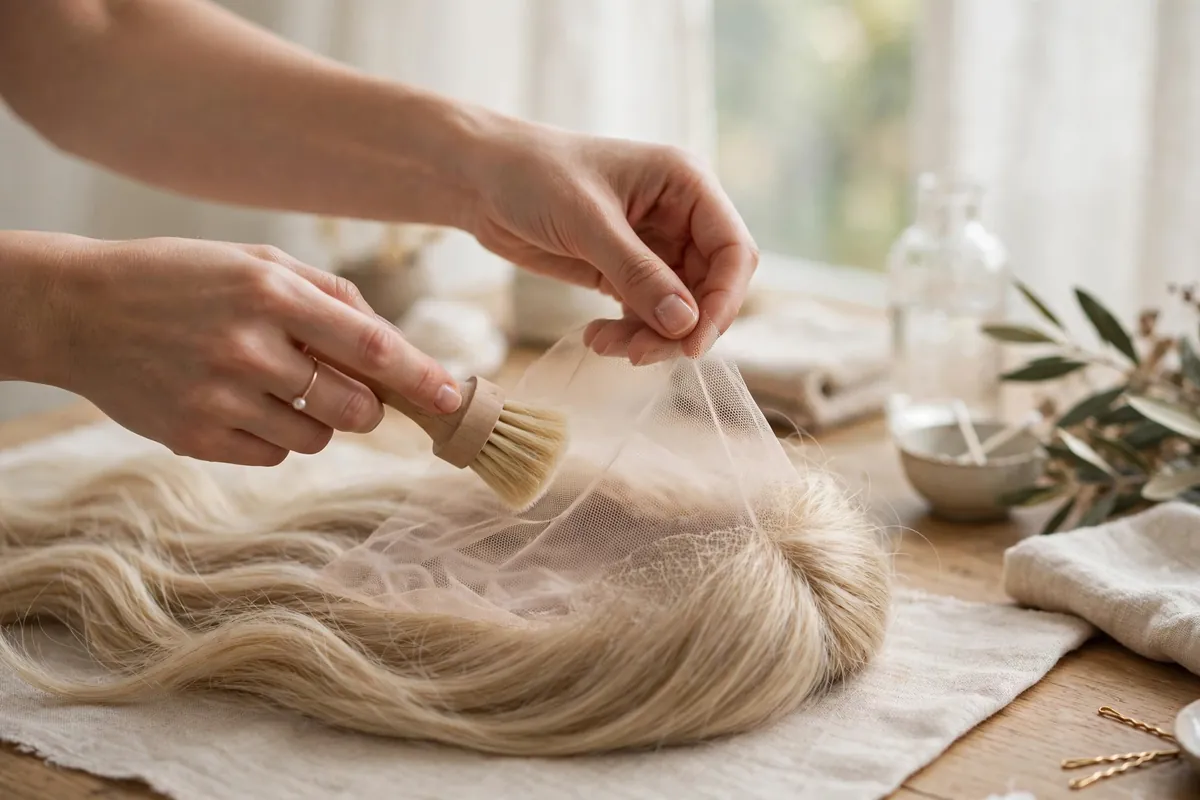
Dampen a soft cloth, cotton pad or very soft brush with lukewarm water and a tiny amount of gentle, sulphate-free shampoo, or with adhesive remover for glue residue. Wipe or dab along the lace in small sections, working from the edge inwards, and rinse the cloth often so you are not spreading residue back across the hairline. This is one of those lace front wig care tips that sounds slow, but it takes only a few minutes and it prevents the fraying that begins when dried glue is scrubbed hard.
Washing Your Lace Front Wig Step by Step
When the whole wig needs washing, protect the lace at every stage. Our guide to how to wash a wig at home covers the general method in detail, and the lace front version below adds the extra care the hairline needs.
- Detangle the lengths first, from the ends upwards, keeping the brush away from the lace.
- Fill a basin with cool or lukewarm water and a small amount of shampoo suitable for the fibre, synthetic or human hair.
- Lower the wig into the water supporting the whole cap, and smooth the shampoo through the lengths. Do not bunch the wig up or rub the lace between your hands.
- Lift the lace edge out and clean it separately with the cloth method above if it still holds residue.
- Rinse under cool running water, letting the water flow down the hair, until it runs clear.
- Apply conditioner to the mid-lengths and ends only. Conditioner worked into the lace can loosen the knots, so keep it away from the front.
How Often Should You Wash a Lace Front Wig?
When people ask about lace front wig care tips, washing frequency is usually the first question. A wig worn every day in a busy UK town or city, with commuting, make-up and styling product, usually needs washing after about seven to ten wears. A wig worn once or twice a week for occasions can go much longer between washes.
Judge it by condition rather than the calendar alone. Wash sooner if the hair looks dull, tangles quickly, holds odour, or if the lace feels stiff with product. As with most wig care and maintenance tips, overwashing is a risk too: every wash is handling, water and friction, so washing a clean wig just for routine will shorten its life rather than extend it.
Drying and Storing Your Wig on a Stand
After washing, press the lengths gently between the folds of a clean, soft towel. Never wring, twist or shake a wet lace front wig, because wet hair is heavier and the extra weight pulls directly on the lace. Place the wig on a wig stand, arrange the parting and hairline with your fingers, and let it air dry in a ventilated room, away from radiators and direct sunlight.
Storage is where lace front wig care tips pay off quietly every night. Keep the wig on its stand when it is not worn, so the cap keeps its shape and the hairline is not folded, crushed or rubbed inside a drawer. A stand also lets air circulate, which helps the lace and cap stay fresh. For travel, pack the wig carefully in a soft satin bag or its original box, with the lace lying flat and uncreased. A proper stand and gentle storage cost only a few pounds, far less than replacing a wig whose lace has been ruined in a bag.
Avoiding Heat and Friction Damage at the Hairline
Heat and friction do their worst damage exactly where you can least afford it: at the front. Keep straighteners, curling wands and hot brushes away from the lace itself, and use the lowest effective setting on human hair wigs, well back from the hairline. Standard synthetic fibres should not be heated at all unless the maker states that they are heat-friendly, because a single pass can frizz the fine hairs at the front beyond repair.
Friction is easier to miss. Hats, headscarves, helmets and headbands that rub across the forehead can wear the edge of the lace and loosen front knots over time, so choose smooth linings and avoid dragging them on and off. Sleeping in a lace front wig also rubs the hairline against the pillow all night, so remove it before bed where you can, or use a smooth satin pillowcase or bonnet if you need to keep it on. Following lace front wig care tips on heat and friction will not just protect the lace; it will keep baby hairs and the parting looking natural for longer.
Repairing Minor Lace Issues
Small problems can often be dealt with early, before they become reasons to retire the wig. If the very edge of the lace frays slightly, trim only the loose, hairless mesh with small sharp scissors, cutting conservatively and never into the hairline itself. If a tiny section lifts or a knot works loose, stop wearing the wig until it is sorted, because continued pulling will enlarge the weak spot.
Larger tears, thinning at the parting or a bald patch at the front are jobs for a professional wig repair service or an experienced UK wig studio, which may be able to re-ventilate the area or patch the lace. Ask for a quote first; on a good human hair wig that cost a considerable amount, a repair in pounds is often far better value than a replacement. What you should not do is glue a tear shut on the skin side or sew through the hairline with thick thread, as both make later professional repair harder.
Common Lace Front Mistakes to Avoid
- Ripping the wig off before adhesive has fully released.
- Scrubbing, wringing or bunching the lace during washing.
- Working conditioner, oils or heavy styling product into the knots at the front.
- Using hot tools close to the hairline, or on synthetic fibres that are not heat-friendly.
- Storing the wig folded, in a plastic bag, or hanging by its lace.
- Ignoring a small fray or tear until it spreads across the hairline.
Frequently Asked Questions
How long should a lace front wig last?
With careful handling, a synthetic lace front wig often lasts several months of regular wear, while a good human hair lace front can last a year or more. Lifespan depends far more on how the lace is treated than on the calendar, which is why gentle removal, cleaning and storage matter so much.
Can I sleep in my lace front wig?
It is better to remove it, because a night of friction against a pillow loosens knots and wears the edge of the lace. If you do sleep in it, use a satin pillowcase or bonnet and loosen any adhesive hold first, and expect a shorter lifespan.
Can I use my normal shampoo on a lace front wig?
For human hair wigs, a gentle, sulphate-free shampoo is usually suitable. For synthetic wigs, use a product made for synthetic fibres. Whichever you choose, keep rich conditioners and oils away from the lace knots at the front.
Final Thoughts
The best lace front wig care tips are not complicated or expensive. Release adhesive patiently, clean the lace while it is supported, wash gently and not too often, dry and store the wig on a stand, and keep heat and friction away from the hairline. Build those habits into your normal wig care tips routine and your lace front will keep the natural, confident look you bought it for, wear after wear.