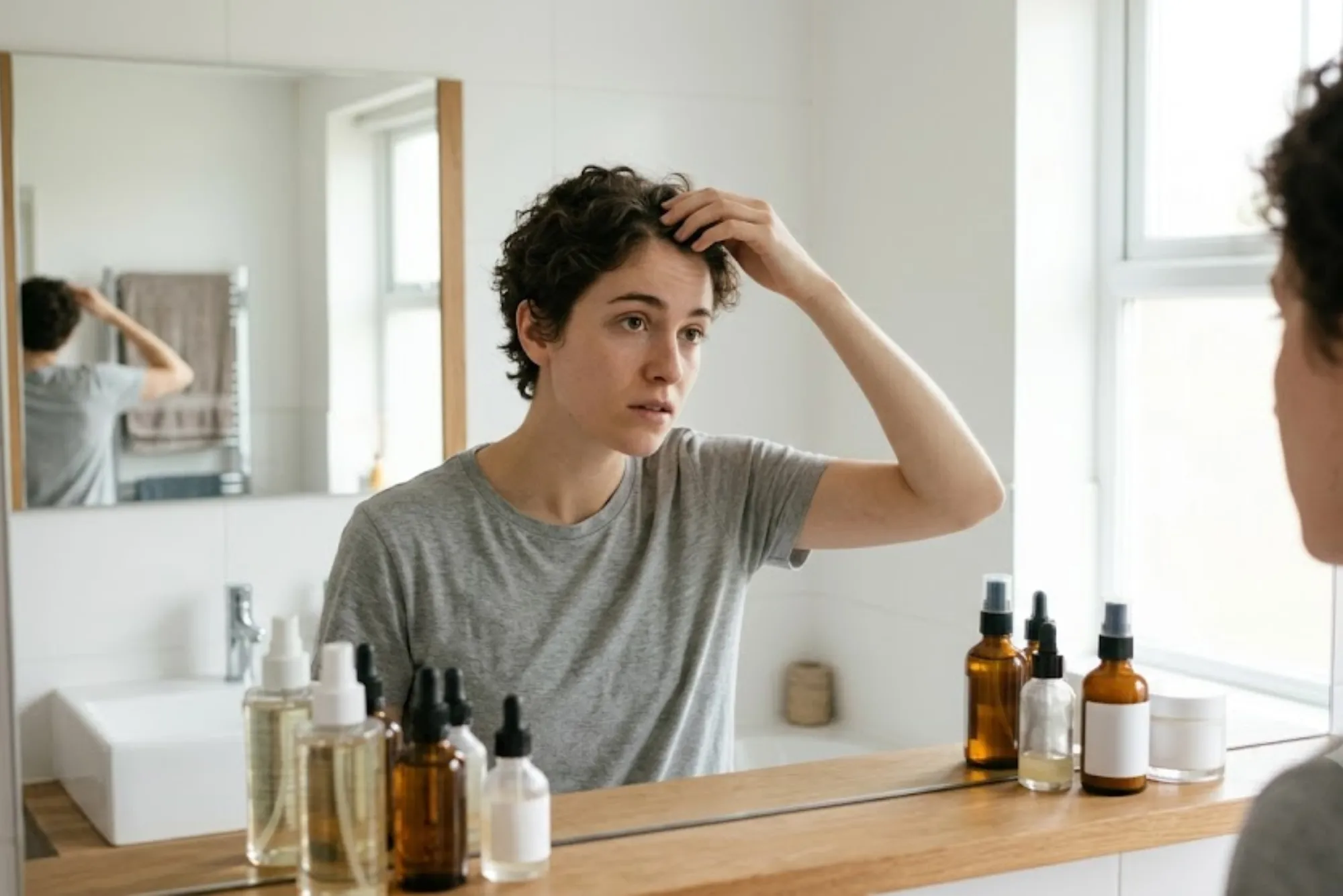
Experiencing scalp tenderness and hair loss at the same time can be unsettling. While some forms of hair thinning happen without any discomfort, a painful, sensitive, or sore scalp may indicate that inflammation or another underlying condition is affecting your hair follicles.
Occasional scalp sensitivity is relatively common, but persistent tenderness combined with noticeable hair shedding should not be ignored.
Understanding the possible causes can help you decide when to seek professional advice.
What Does Scalp Tenderness Feel Like?
People describe scalp tenderness in different ways.
Common symptoms include:
- Aching or soreness
- Burning sensations
- Pain when brushing hair
- Tingling or sensitivity
- Discomfort when touching certain areas
- Itching alongside tenderness
The symptoms may be temporary or persistent, depending on the underlying cause.
Can Scalp Inflammation Cause Hair Loss?
Yes. Inflammation can interfere with normal hair follicle function.
When inflammation affects the scalp for prolonged periods, it may disrupt the hair growth cycle and contribute to thinning.
The severity varies considerably between individuals.
In some cases, hair loss may be temporary. In others, particularly certain scarring conditions, early intervention becomes important.
Common Causes of Scalp Tenderness and Hair Loss
1. Scalp Dermatitis
Dermatitis is one of the more common causes of scalp irritation.
Symptoms may include:
- Redness
- Flaking
- Itching
- Sensitivity
- Temporary shedding due to irritation
Some people benefit from using a specialist scalp dermatitis shampoo, particularly when dandruff or seborrhoeic dermatitis is present.
However, shampoo alone may not address every underlying cause.
2. Autoimmune Conditions
The immune system can sometimes mistakenly target healthy hair follicles.
Certain autoimmune disorders may trigger:
- Inflammation
- Patchy hair loss
- Diffuse thinning
- Scalp discomfort
If this is suspected, you may find it helpful to read more about autoimmune hair thinning.
3. Tight Hairstyles and Traction
Constant tension from hairstyles can place stress on both the scalp and hair follicles.
Common examples include:
- Tight ponytails
- Braids
- Hair extensions
- Protective styles worn too tightly
Persistent traction may eventually damage follicles if left unaddressed.
4. Stress and Tension
Physical and emotional stress can affect both scalp sensitivity and hair growth cycles.
Stress-related hair shedding often develops several months after a triggering event.
5. Scarring Alopecia Conditions
Certain forms of alopecia involve inflammation that permanently damages hair follicles.
These conditions require early diagnosis to minimise progression.
If you have a receding frontal hairline or eyebrow changes, specialist assessment is recommended.
When Should You Worry About a Tender Scalp?
Seek medical advice if symptoms persist for several weeks or are accompanied by:
- Rapid hair loss
- Bald patches
- Redness or swelling
- Scalp scaling
- Changes to eyebrows or eyelashes
- Burning sensations
Persistent symptoms deserve proper investigation rather than self-diagnosis.
Can Blood Tests Help?
Sometimes.
If your GP suspects an underlying health condition, they may recommend a hair loss blood test.
Blood tests may help identify contributing factors such as:
- Iron deficiency
- Vitamin deficiencies
- Thyroid disorders
- Autoimmune markers
- Hormonal imbalances
These tests are used alongside clinical assessment rather than as standalone diagnostic tools.
How Is Scalp Dermatitis Usually Managed?
Treatment depends on the specific cause.
Healthcare professionals may recommend:
- Medicated shampoos
- Anti-inflammatory treatments
- Adjustments to hair care products
- Managing triggers that worsen symptoms
Because every scalp condition is different, avoiding overly harsh products can be beneficial.
It is also important not to over-wash or aggressively scrub irritated areas.
Should You Use Online Baldness Calculators?
Some people turn to online tools before seeking medical advice.
A will I go bald calculator may estimate hereditary risk factors.
However, it cannot assess inflammatory conditions, scalp tenderness, or medical causes.
Scalp symptoms require a more comprehensive assessment.
What About Hairfall Before and After Photos?
Transformation photos are widely shared online.
While they can provide encouragement, they rarely tell the entire story.
Everyone responds differently to treatment.
For more balanced expectations, reviewing hairfall before and after journeys can help you understand how varied recovery timelines can be.
Practical Tips to Protect Your Scalp
Small changes can help reduce irritation while you seek professional advice.
- Use gentle hair products
- Avoid excessive heat styling
- Reduce tight hairstyles
- Minimise scratching
- Manage stress levels where possible
- Seek assessment if symptoms persist
Protecting scalp health often supports overall hair health too.
When Should You See a Specialist?
Your GP may refer you to a dermatologist if:
- Hair loss progresses quickly
- Inflammation is significant
- Scarring alopecia is suspected
- Standard treatments are ineffective
- The diagnosis remains unclear
Early intervention is particularly important when inflammation is involved.
For trusted guidance about scalp conditions and hair loss symptoms, the NHS hair loss information page provides useful information about when to seek medical help.
Final Thoughts
Scalp tenderness and hair loss can have several different causes, ranging from temporary irritation to inflammatory or autoimmune conditions.
Persistent symptoms should not be ignored, especially if discomfort and shedding occur together.
The earlier you seek professional advice, the easier it may be to identify the underlying cause and begin appropriate management.
A healthy scalp provides the foundation for healthy hair, making early assessment an important part of protecting long-term hair health.