If you have been comparing wig caps, monofilament wigs are probably the ones that left you puzzled. The word sounds technical, yet the idea behind it is simple, and it explains why some wigs look so much more natural than others. This guide walks through how a monofilament cap is made, what it feels like to wear, who it suits best, and what to check before you spend money on one.
What a monofilament wig actually is
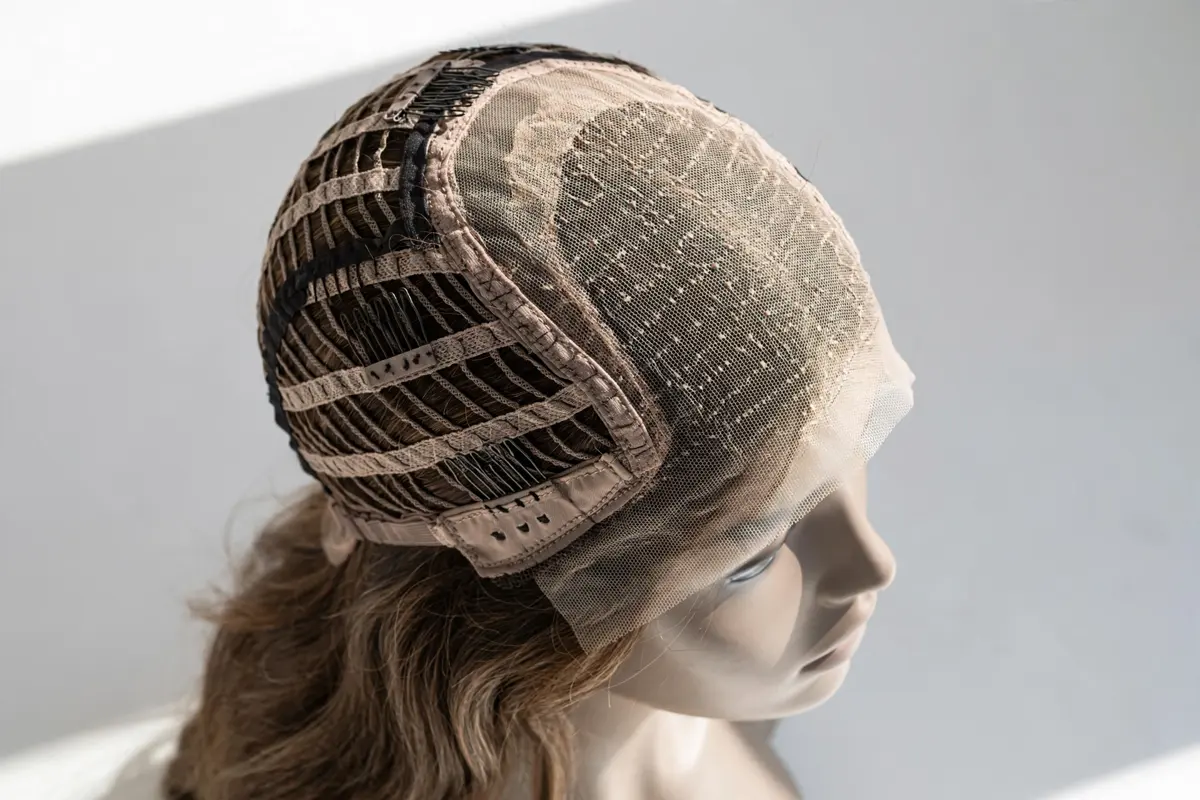
Monofilament is a very fine, sheer mesh fabric. On a monofilament wig, individual hairs are tied by hand into that mesh, usually across the top or the parting area. Because each hair sits in the mesh on its own, it moves in a natural way, and the mesh lets your own skin tone show through, so the top of the wig looks like a real scalp.
Most wigs sold as monofilament have a monofilament top or parting, with the rest of the cap machine-made. A smaller number are fully hand-tied. Our guide to the different types of wigs explains where monofilament sits alongside lace front and basic cap styles.
How the cap is made, and why it takes longer
Hand-tying is slow work. A maker knots one or two hairs at a time into the mesh, following the direction real hair would grow. A single monofilament top can take hours of skilled work, which is the main reason these wigs cost more than machine-wefted ones.
There are three layouts you will see in UK shops. A monofilament parting gives you a natural-looking part on one side. A monofilament top covers the whole crown, so you can move the parting around. A full monofilament cap covers the entire head and is usually paired with hand-tying throughout.
The benefits that matter day to day
- A scalp that looks real. The sheer mesh shows skin tone underneath, so the parting does not give the wig away.
- Freedom with styling. You can brush the hair in different directions and change the parting without exposing wefts.
- Comfort on sensitive skin. The mesh is soft and smooth, which matters if your scalp is tender after treatment or you have total hair loss.
- Less bulk on top. Hand-tied hair lies flatter than machine wefts, so the crown looks natural rather than puffy.
Take Sarah, a primary school teacher from Leeds who lost her hair during chemotherapy. A basic cap felt itchy by lunchtime, and the fixed parting made her self-conscious in front of her class. A monofilament top felt softer against her scalp, and being able to sweep the fringe a different way each day made the wig feel like her own hair again.
Who monofilament wigs suit best
You will get the most from this cap if you wear a wig all day, every day. It suits people with complete or heavy hair loss, because there is little or no natural hair to blend at the parting. It also suits anyone whose scalp is sensitive, since the smooth mesh rubs less than wefted strips.
If you only wear a wig for nights out, a simpler cap may do the job for less money. If you like a lot of volume at the crown, a wefted cap can give you more lift. The honest answer depends on how many hours a day the wig will spend on your head.
Monofilament, lace front or a basic cap?
A lace front focuses on the hairline and gives a natural front edge, while the rest of the cap is usually wefted. Our lace front frontal wig guide explains that style in detail. A full lace wig uses lace across the whole cap and can be worn in high ponytails. Monofilament focuses on the top and parting instead, and plenty of wearers choose a wig that combines a lace front with a monofilament top, which covers both areas people look at most.
A basic wefted cap is the budget option. It is light and airy, but the parting is fixed and the top can look less natural at close range.
What monofilament wigs cost in the UK
Expect a wide range. A synthetic monofilament wig from a UK retailer commonly costs between £90 and £250. Human hair versions usually start around £350 and can pass £1,000 for long, fully hand-tied pieces. You are paying for the hand-tying time, so length and the size of the monofilament area push the price up.
Cost per wear tells the fairer story. A wig worn daily needs to last, and our guide to how long wigs last shows how cap quality and care affect lifespan. A cheaper cap replaced twice can end up costing more than one well-made monofilament wig.
Looking after the monofilament area
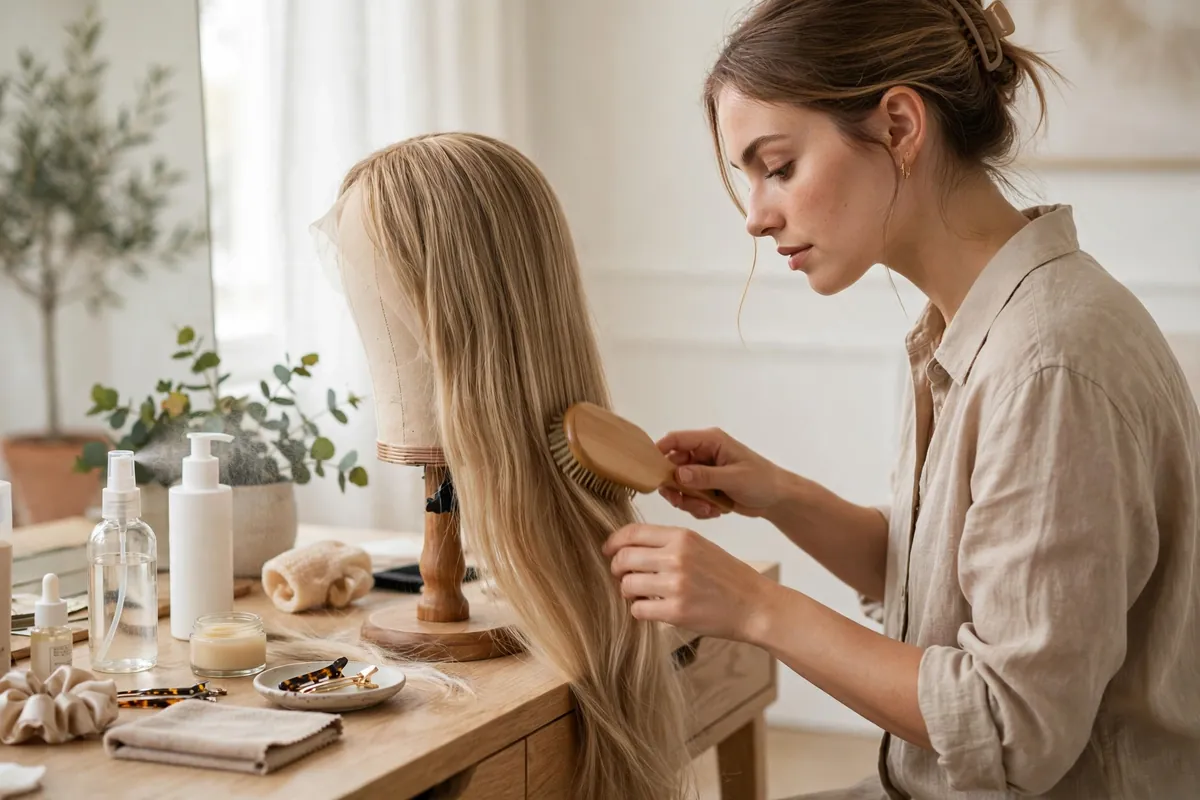
The mesh is strong for its weight, but it is still the most delicate part of the cap. Brush from the ends upward and never drag a brush across the top. Wash the wig in cool water, keep conditioner away from the knots at the top, and let it dry on a stand rather than wringing it out. Our full wig care guide walks through washing and storage step by step.
One habit matters most. Always loosen tangles with your fingers first, because pulling a knot tight against the mesh can work hairs loose over time.
What to check before you buy
- Cap size. Measure your head and compare it with the size chart, because an average cap fits heads of around 54 to 57 centimetres.
- The size of the monofilament area. A small parting panel costs less, but a full top gives more styling freedom.
- Hair type. Synthetic fibre is cheaper and holds its style, while human hair can be heat-styled and usually lasts longer.
- Return terms. Check whether you can return an unworn wig, and keep the tags on until you are sure.
- Your daily routine. If the wig is for work, choose a style you can put on in five minutes on a busy morning.
Our guide on how to choose a wig goes deeper on fit, fibre and colour if you want a second opinion before ordering.
Making the call
A monofilament wig is not the right answer for everyone, and it is rarely the cheapest option on the shelf. What it offers is a natural-looking top, a softer feel on the scalp, and styling freedom that basic caps cannot match. If you wear a wig all day and the parting is the part that worries you, this is the cap style to try first. Start with one well-fitting piece, learn how it likes to be washed and brushed, and let your own routine tell you whether you need another.