
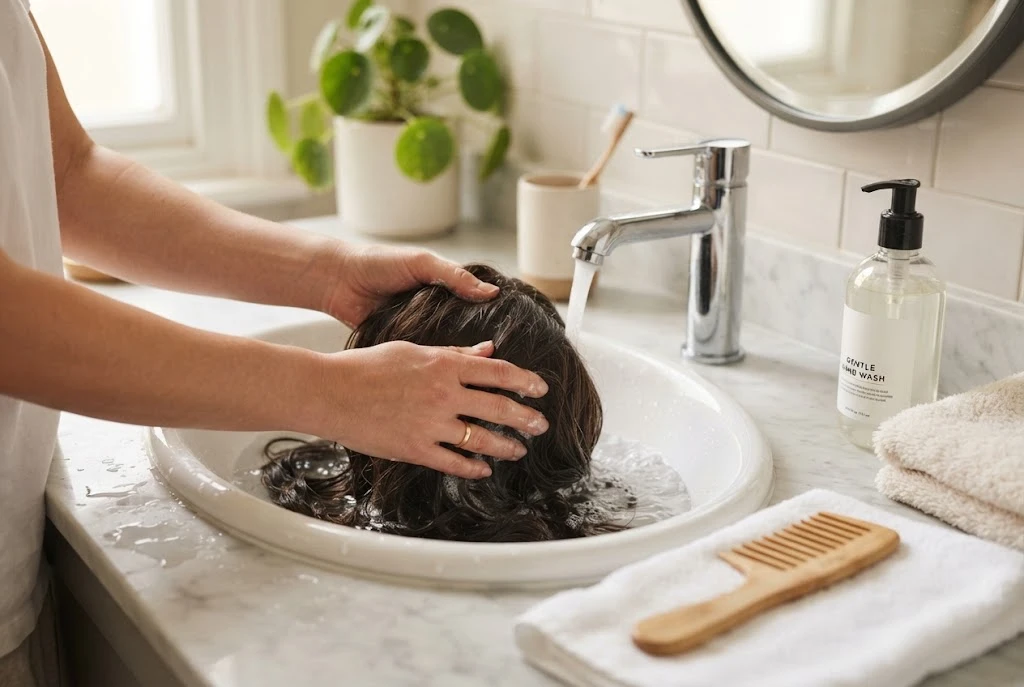
Learning how to wash a synthetic wig without wig shampoo can be useful when you need to clean your wig but do not have a specialist cleanser available. The important thing is to choose a gentle alternative and avoid products or washing methods that could leave synthetic fibres dry, coated, tangled or damaged.
Synthetic wigs do not need to be treated exactly like natural hair. Their fibres are manufactured rather than growing from a scalp, so ordinary hair products are not always the best choice. However, with careful handling, cool water and a mild cleansing alternative, you can clean a synthetic wig at home when specialist wig shampoo is unavailable.
This guide explains what you can use, what to avoid, how to wash your wig step by step and how to dry it safely afterwards.
Can You Wash a Synthetic Wig Without Wig Shampoo?
Yes, you can wash a synthetic wig without specialist wig shampoo, but you should be selective about the alternative you use. A dedicated synthetic-wig cleanser remains the preferred option when available because it is formulated for the particular properties of synthetic fibres.
If you do not have wig shampoo, the safest approach is to avoid aggressive cleansing products and focus on gentle handling. Your choice may depend on the wig manufacturer’s instructions, the type of synthetic fibre and how heavily the wig has been exposed to styling products.
When in doubt, check the manufacturer’s care instructions before using an alternative cleanser. A specialist manufacturer’s guidance should take priority over general advice.
What Can You Use Instead of Synthetic Wig Shampoo?
If specialist wig shampoo is unavailable, a mild, gentle cleanser may be considered, but there is no universal substitute that is suitable for every synthetic wig. The safest choice depends on the manufacturer’s recommendations for your particular fibre.
Some wearers consider using a very mild regular shampoo, particularly when they have no specialist product available. However, ordinary shampoos are designed for human hair and scalp rather than synthetic fibres, so they should not automatically be treated as equivalent to synthetic wig shampoo.
Avoid assuming that stronger cleansing means a cleaner wig. Synthetic fibres can collect residue from styling products, but aggressive products can make the maintenance process more difficult.
If you regularly wear synthetic wigs, keeping a suitable synthetic-wig cleanser available is a better long-term solution. For guidance on choosing the right product, see our upcoming guide to the best shampoo for synthetic wigs.
How to Wash a Synthetic Wig Without Wig Shampoo Step by Step
1. Check the Wig’s Care Instructions
Before washing, check the label or instructions supplied with your wig. Look for information about the fibre type, suitable products, water temperature and drying method.
This step matters because synthetic wigs are not all identical. Standard synthetic fibres and heat-friendly synthetic fibres can have different care requirements.
2. Gently Detangle the Wig
Place the wig on a suitable stand and gently remove tangles before adding water. Use a wide-tooth comb or brush designed for wig care.
Start at the ends and gradually work upwards. If you encounter a knot, do not pull forcefully. Separate the tangled section and work through it slowly.
Longer wigs can become particularly tangled around the nape because the hair repeatedly rubs against clothing. Give this area extra attention before washing.
3. Prepare Cool or Lukewarm Water
Use cool or lukewarm water rather than very hot water. Synthetic fibres can be sensitive to excessive heat, so there is little benefit in exposing a standard synthetic wig to high temperatures.
Fill a clean basin if you prefer to wash the wig in standing water, or use gentle running water. Avoid creating unnecessary movement that could encourage the fibres to tangle.
4. Use a Gentle Alternative Cleanser
If you have no specialist synthetic wig shampoo, use only a mild alternative that is compatible with your wig’s care instructions.
Apply a small amount and gently distribute it through the fibres. Do not scrub vigorously. Instead, smooth the cleanser through the hair while keeping the fibres moving in their natural direction.
If the wig is only lightly soiled, avoid using excessive amounts of cleanser. More product does not necessarily produce better results.
5. Rinse Thoroughly
Rinse the wig carefully with cool or lukewarm water until the cleanser has been removed.
Allow the water to travel through the fibres rather than rubbing or twisting the hair. Continue rinsing until there is no visible product residue.
Thorough rinsing is especially important when using a non-specialist product because leftover residue can affect the feel and appearance of the fibres.
6. Condition Only With a Suitable Product
Do not automatically apply your normal hair conditioner to a synthetic wig. If you want to use a conditioning product, choose one specifically intended for synthetic wig fibres and follow its instructions.
Specialist conditioning sprays can help with manageability, but excessive product can create buildup. Use only the amount recommended for the particular product.
7. Remove Excess Water Gently
After rinsing, allow excess water to drain naturally. Support the wig rather than lifting it by a small section of hair.
Place it on a clean towel and gently pat away moisture. Never wring, twist or aggressively squeeze the wig.
8. Allow the Wig to Air Dry
Place the wig on a suitable stand and arrange the fibres into their natural shape. Allow the wig to dry naturally in a well-ventilated area.
Standard synthetic wigs should be protected from excessive heat. Avoid radiators, hair dryers and other intense heat sources unless the manufacturer’s instructions specifically permit a particular method.
Can You Wash a Synthetic Wig With Regular Shampoo?
This is one of the most common questions about washing synthetic wigs. Technically, a mild regular shampoo may be considered as an emergency alternative for some wigs, but it is not automatically the best choice.
Regular shampoo is formulated for human hair and scalp. Synthetic fibres have different characteristics, which is why specialist synthetic-wig products are generally preferable for routine care.
If you have no wig shampoo available, check your wig’s instructions first. If they do not recommend a particular alternative, use the gentlest suitable option rather than a strong clarifying, medicated or highly cleansing shampoo.
Avoid products designed to remove heavy oils aggressively. Synthetic fibres do not require scalp-style cleansing, and unnecessarily strong products may make the fibres harder to manage.
Can You Wash a Synthetic Wig With Mild Shampoo?
A mild shampoo may be a possible temporary alternative, depending on the wig manufacturer’s instructions. If you choose this approach, use a small amount, dilute it where appropriate and avoid vigorous rubbing.
However, this should not be interpreted as meaning every mild shampoo is suitable for every synthetic wig. Fibre composition, finish and construction can affect the correct care method.
For regular washing, a product specifically formulated for synthetic wigs remains the more appropriate choice. The purpose of an alternative method is to help when a specialist product is unavailable, not necessarily to replace it permanently.
How to Wash a Cheap Synthetic Wig Without Wig Shampoo
If you are washing a cheaper synthetic wig, gentle care is still important. Lower-cost does not mean the fibres should be exposed to harsh products, high temperatures or aggressive brushing.
Start by removing tangles carefully. Then use cool or lukewarm water and a mild cleansing alternative that is appropriate according to the manufacturer’s instructions. Keep friction to a minimum and rinse thoroughly.
After washing, pat away excess moisture and let the wig air dry. Avoid trying to restore the style with excessive heat unless the wig is specifically designed for heat styling.
A simple, careful routine can help prevent unnecessary wear regardless of the original price of the wig.
What You Should Not Use on a Synthetic Wig
When you are looking for alternatives to wig shampoo, it can be tempting to experiment with household products. That is usually unnecessary.
- Very strong clarifying shampoos: these may provide more cleansing than the synthetic fibres require.
- Harsh household cleaners: products intended for surfaces or fabrics should not be used on wig fibres.
- Very hot water: excessive heat can affect standard synthetic fibres.
- Strong solvents: these are unsuitable for routine wig cleaning.
- Large amounts of conditioner: excessive product can create buildup.
- Heavy oils: these can make synthetic fibres feel coated and difficult to manage.
When caring for a wig, simple is usually better. Use a suitable cleansing product, minimal friction and the correct water temperature.
Common Mistakes When Washing Synthetic Wigs Without Wig Shampoo
Using Too Much Alternative Shampoo
If you are using a mild alternative, more product is not necessarily better. Excess cleanser can make rinsing more difficult and leave unwanted residue.
Scrubbing the Hair
Do not scrub the fibres between your hands. Aggressive friction can encourage tangling and may affect the appearance of the wig.
Washing With Hot Water
Hot water can expose synthetic fibres to unnecessary heat. Cool or lukewarm water is a safer approach for standard synthetic wigs.
Wringing the Wig Dry
Never twist or wring a wet synthetic wig. Instead, gently pat it with a clean towel to remove excess moisture.
Blow-Drying Without Checking the Fibre Type
Do not assume a synthetic wig can be blow-dried simply because it looks like natural hair. Standard synthetic fibres can be heat-sensitive, so air drying is generally the safer option.
Ignoring Product Buildup
Styling sprays, creams and other products can accumulate on synthetic fibres. If the wig is heavily coated, a specialist synthetic-wig cleanser may be more appropriate than repeatedly experimenting with household alternatives.
How Often Should You Wash a Synthetic Wig?
The ideal washing frequency depends on how often you wear the wig, your styling routine and the amount of sweat, environmental dirt and product buildup it experiences.
A wig worn occasionally may need washing less frequently than one worn several days each week. If the fibres feel coated, look dull or develop an unwanted odour, it may be time to clean the wig.
However, washing a wig unnecessarily often can also create additional wear. A balanced maintenance routine is better than washing after every use.
For a complete synthetic-fibre washing routine, see our guide on how to wash a synthetic wig.
What to Do After Washing a Synthetic Wig
Once the wig has been washed and gently towel-dried, place it on a stand and arrange the fibres into their intended direction.
Allow it to dry completely before storing or wearing it. Avoid repeatedly brushing the wig while it is drying because unnecessary manipulation can create tangles.
When completely dry, gently check the ends and nape for any remaining tangles. Use an appropriate wig comb or brush if necessary.
Should You Always Use Wig Shampoo?
For routine care, specialist synthetic wig shampoo is generally the better choice. It is designed specifically for synthetic fibres, making it more appropriate than relying on regular shampoo every time the wig needs cleaning.
Knowing how to wash a synthetic wig without wig shampoo is nevertheless useful when you are travelling, have run out of your normal product or need to clean the wig unexpectedly.
The key is to treat an alternative cleanser as a temporary solution rather than assuming that any household hair product will work equally well.
Quick Checklist for Washing a Synthetic Wig Without Wig Shampoo
- Check the manufacturer’s care instructions first.
- Identify whether the wig is standard or heat-friendly synthetic.
- Gently detangle before washing.
- Use cool or lukewarm water.
- Choose only a mild, suitable alternative cleanser.
- Use a small amount of product.
- Do not scrub or twist the fibres.
- Rinse thoroughly.
- Use synthetic-wig conditioner only when appropriate.
- Pat away excess water with a clean towel.
- Air dry the wig on a suitable stand.
- Avoid unnecessary heat.
- Use specialist synthetic wig shampoo for regular maintenance when possible.
Final Thoughts
Knowing how to wash a synthetic wig without wig shampoo can be helpful when a specialist product is not available. However, the goal should always be to minimise stress on the fibres rather than simply finding the strongest cleaning product.
Check the manufacturer’s instructions, use cool or lukewarm water, choose a gentle alternative when appropriate and handle the wig carefully throughout the process. Avoid harsh cleaners, aggressive scrubbing, excessive conditioner and unnecessary heat.
For regular wig care, a dedicated synthetic-wig cleanser is still the preferred option. If you are deciding which product to keep in your wig-care kit, our guide to the best shampoo for synthetic wigs will cover the key factors to consider.