
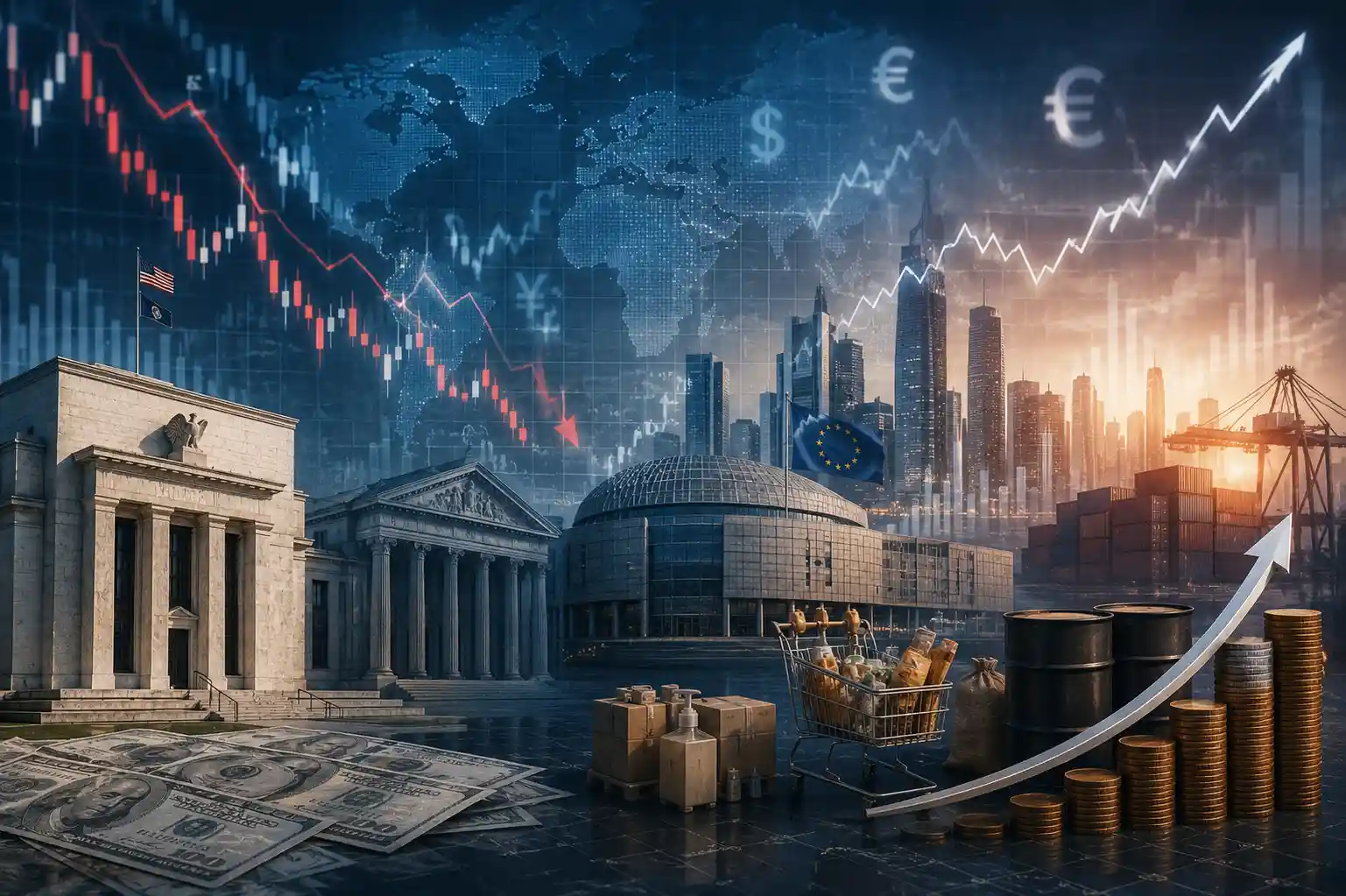
As the world navigates post-pandemic recovery, inflation is no longer a temporary issue — it has become a structural challenge shaping the future of global markets.
Understanding Inflation in the Global Economy
Inflation refers to the sustained increase in the general price level of goods and services. While moderate inflation is considered healthy, excessive inflation erodes purchasing power and creates uncertainty in financial markets.
In recent years, inflation has surged due to multiple factors:
- Supply chain disruptions caused by global crises
- Energy price volatility
- Labor shortages in key industries
- Increased consumer demand post-pandemic
According to data from the International Monetary Fund (IMF), inflation rates in several developed economies reached multi-decade highs, forcing central banks to take aggressive action.
The Role of Central Banks in Controlling Inflation
Central banks such as the Bank of England, the Federal Reserve, and the European Central Bank play a critical role in managing inflation. Their primary tool is monetary policy, which includes adjusting interest rates and controlling money supply.
When inflation rises:
- Interest rates are increased to reduce spending
- Borrowing becomes more expensive
- Consumer demand slows down
However, tightening monetary policy comes with risks. Higher interest rates can slow economic growth and even trigger recessions if not managed carefully.
Global Economic Pressures in 2026
The global economy is facing several overlapping challenges that make inflation harder to control:
- Geopolitical tensions affecting trade routes
- Fluctuating energy markets
- Rising government debt levels
- Technological disruptions in labor markets
These pressures are forcing policymakers to rethink traditional economic strategies. As discussed in our analysis on the need for reform in the global economic system, structural changes may be required to ensure long-term stability.
Impact on Businesses and Consumers
Inflation affects both businesses and individuals in different ways. Companies face rising operational costs, while consumers experience reduced purchasing power.
Businesses are responding by:
- Adjusting pricing strategies
- Optimizing supply chains
- Investing in digital transformation
For example, many UK-based firms are turning to digital solutions to improve efficiency and reduce costs. Services like professional website development are helping businesses adapt to changing market conditions.
The Rise of the Digital Economy as a Buffer
One of the key trends shaping the future is the rapid expansion of the digital economy. As inflation impacts traditional sectors, digital platforms are creating new opportunities for growth.
This shift is explored further in our article on digital economy growth projections, where emerging technologies are expected to play a crucial role in economic resilience.
Central Bank Strategies Moving Forward
Central banks are now adopting more flexible approaches to deal with inflation. These include:
- Data-driven policy adjustments
- Forward guidance to manage market expectations
- Coordination with fiscal authorities
The challenge lies in achieving a “soft landing” — controlling inflation without causing a severe economic slowdown.
Global Cooperation is Key
Inflation is not a problem that can be solved by individual countries alone. Global coordination is essential to stabilize markets and ensure sustainable growth.
Organizations such as the World Economic Forum emphasize the importance of collaboration between governments, financial institutions, and private sectors.
This becomes even more relevant when considering ongoing global risks, as discussed in post-pandemic economic challenges.
Conclusion
The global economy is at a critical juncture where inflation is reshaping financial systems and policy decisions. Central bankers must navigate a delicate balance between controlling inflation and sustaining growth.
As economic conditions continue to evolve, businesses and policymakers alike must adapt to new realities. Embracing innovation, strengthening global cooperation, and rethinking traditional economic models will be essential for long-term stability.