
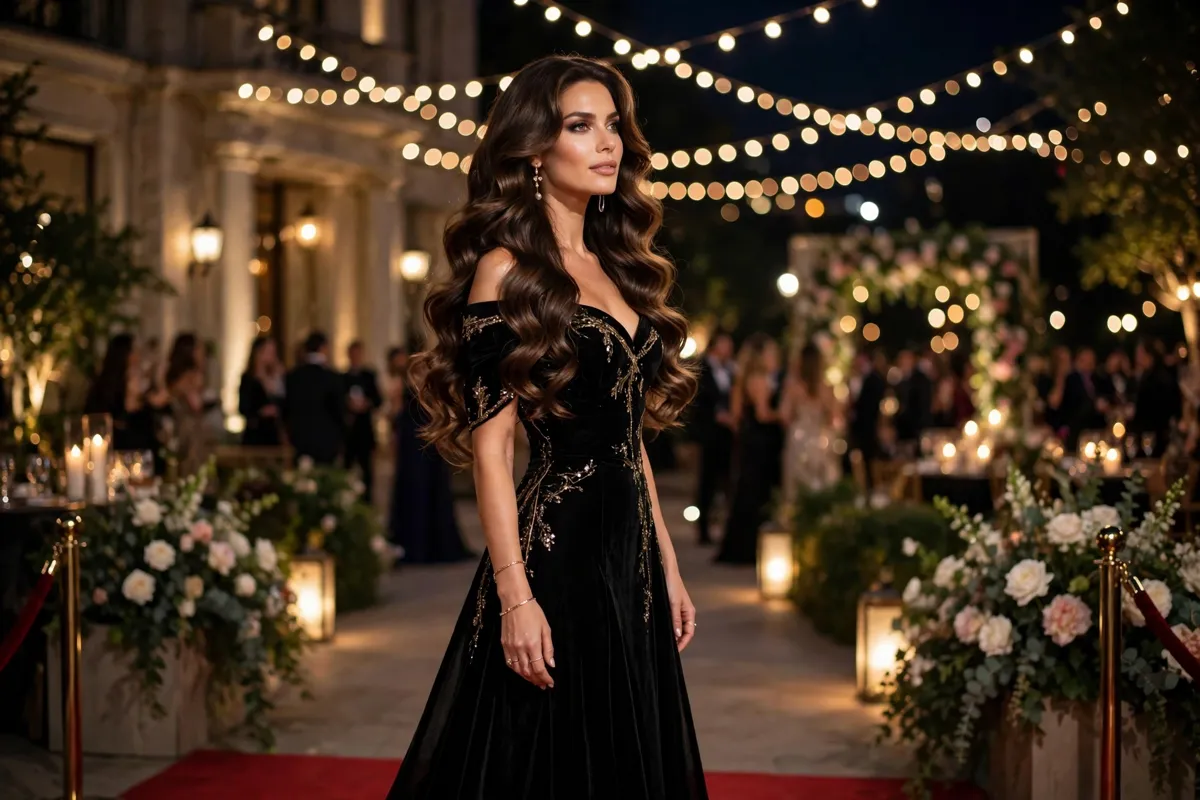
Some of the most copied hairstyles in the world never grew out of anyone’s head. Film sets, music videos and red carpets run on wigs, and celebrity wig styles have quietly shaped what the rest of us ask for at the salon for decades. The good news is that the looks themselves are no longer limited to a celebrity budget — the same constructions and techniques are available on the high street. This guide breaks down why the stars rely on wigs, the styles that keep coming back, and how to recreate the look yourself.
Why celebrities wear wigs so much
The reasons are practical rather than mysterious. A wig allows a complete transformation — new colour, new length, new texture — without bleach, heat or scissors touching the wearer’s real hair. For a performer moving between roles, shoots and appearances in the same week, that protection matters: their natural hair stays healthy underneath while the wig takes the styling damage.
Wigs also save time. A unit that has been cut, coloured and styled in advance can be fitted far faster than restyling natural hair from scratch, and it behaves predictably under lights and cameras. For anyone dealing with thinning hair or hair loss, the same benefits apply in everyday life — which is why techniques developed for the screen now appear in ordinary wig ranges.
The secret: construction, not just hair
What makes a celebrity wig look like real hair in close-up photographs is mostly construction. Lace front wigs create a hairline where each strand appears to grow from the scalp, so styles can be worn away from the face without giving anything away. Monofilament tops go further, allowing the parting to be moved while keeping the same natural effect.
Fit is the other half of the illusion. A wig that is the right size, secured properly and trimmed by a stylist to suit the wearer’s face will always look more convincing than an expensive unit worn straight out of the box. If you are new to this side of things, our complete wig care guide covers fitting basics alongside washing and storage.
Iconic celebrity wig styles that never date
Certain looks return season after season because they flatter almost everyone. The sleek, centre-parted long style is the modern red-carpet default: smooth, glossy and worn tucked behind the ears. It works in human hair for maximum realism, and in good heat-friendly synthetic fibre if you want the same shape for less.
Old-Hollywood waves are the other perennial favourite — deep, structured curls with a side parting, usually in a rich single colour. At the other end of the scale, sharp bobs and short pixie cuts give the strong, camera-friendly outline that stylists reach for when a look needs to read as confident rather than soft. Our guide to women’s curly wigs shows how the softer, romantic wave styles translate into everyday wearables.
Colour: where wigs really win
Celebrity colour changes — ice blonde one month, copper the next, pastel for a single appearance — are almost always wigs. Colour is where a wig beats natural hair outright: no roots, no fading between appointments, and no damage if you change your mind. Bold shades that would be a major commitment in a salon become a single-evening experiment.
If you are trying colour for the first time, start with a shade one or two steps from your natural colouring and wear it at home before an event. Our round-up of blonde human hair wigs explains how to choose between the cooler and warmer blonde families, and the same logic applies to brunettes and reds.
Human hair or synthetic: which do the stars choose?
For film work and major appearances, human hair is the usual choice because it moves, shines and restyles exactly like natural hair — it can be curled, straightened and even coloured by a stylist between looks. The trade-offs are price and maintenance: a human hair unit needs the same washing, conditioning and careful storage as a full head of long hair.
Modern synthetic wigs have closed the gap for everyday recreations. Heat-friendly fibres hold a pre-set style through washing, keep their shape in bad weather and cost far less, which makes them ideal for bold colours and dramatic shapes you may only wear occasionally. Many people copy the celebrity approach in miniature: one good human hair wig for regular wear, and synthetic pieces for experimenting.
How to recreate a red-carpet look at home
Begin with the construction, not the colour: choose a lace front if you want to wear the hair off your face, and a monofilament parting if you like to change where the hair divides. Measure your head and use the size guides — a secure, comfortable fit is what lets a wig move like real hair.
Next, plan one small customisation. Trimming the lace properly, thinning the hairline slightly or having a stylist add face-framing layers makes a bigger difference than spending more on the wig itself. Style on a wig stand, use heat only on fibres rated for it, and keep products light near the front so the lace stays undetectable.
Finally, think about the whole picture. Red-carpet styles look polished because the hair, makeup and outfit were chosen together. A wig worn with confidence, on a head where it fits correctly, does most of the work — the label inside it does none.
Looking after a statement wig
A wig used for events still needs routine care: detangle gently before and after wear, wash after every several wears following the method for its fibre type, and store it on a stand away from sunlight so the style and colour hold. Our article on how long wigs last explains realistic lifespans for synthetic and human hair units and the habits that extend them, and our guide to hair extensions is worth reading if you are comparing a full wig with a partial solution.
Celebrity wig styles are best treated as inspiration rather than a template. Take the shape, the colour family or the finish that appeals to you, choose a construction that suits your budget and routine, and have it fitted and trimmed for your own face. That is exactly what the professionals on the red carpet do — the only real secret is that the wig was never a secret at all.