
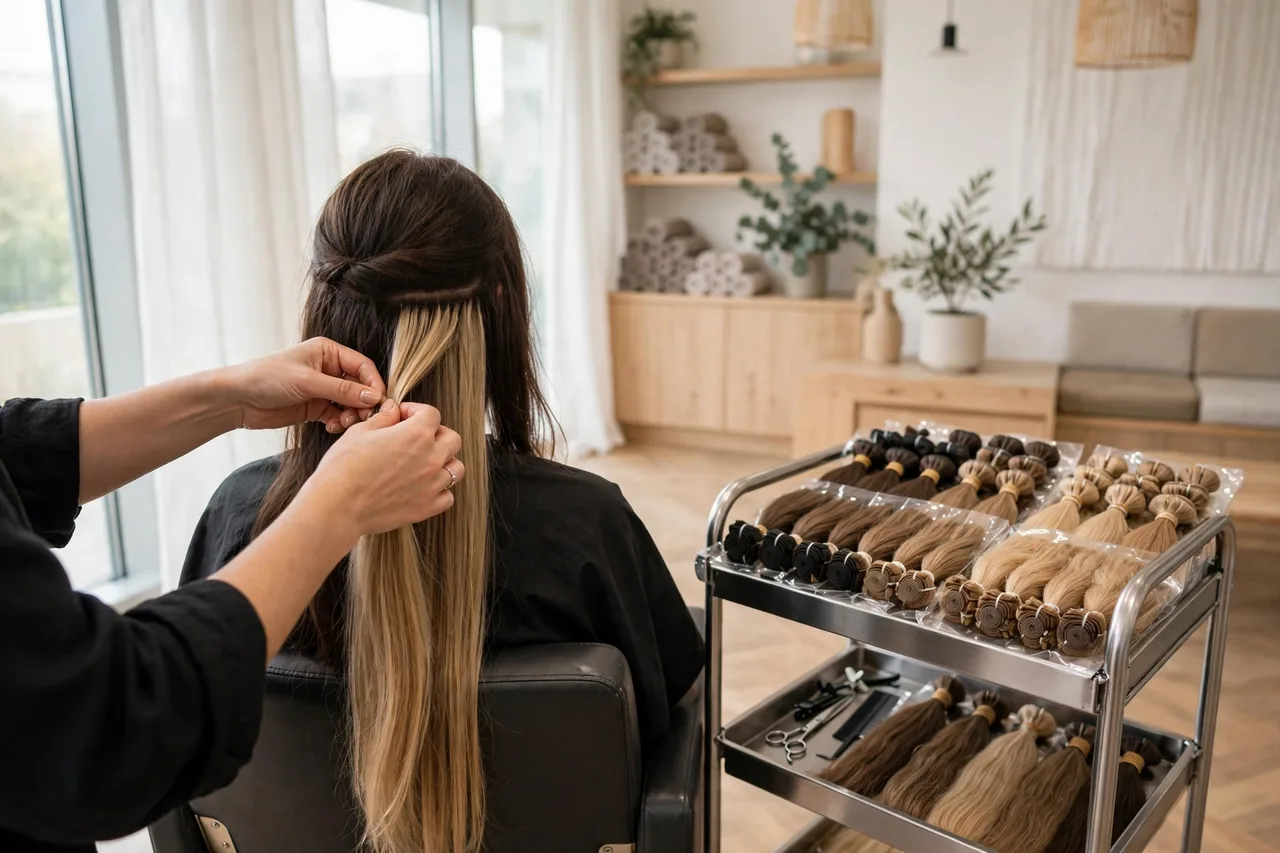
Hair extensions have moved a long way from the obvious, one-length look of the early 2000s. Fitted well, modern extensions are virtually undetectable, and they can add length, volume or both without waiting years for your natural hair to grow. If you are considering them for the first time, the range of methods on offer can feel overwhelming, so this guide breaks down exactly how each type works.
We will cover the main fitting methods, the difference between human and synthetic hair, what to expect at an appointment, aftercare, and how extensions compare with wigs and toppers if your hair is thinning.
What hair extensions actually are
Hair extensions are lengths of additional hair, either human or synthetic, that are attached to your natural hair to increase length, thickness or both. They come as wefts (curtains of hair), individual strands, or ready-made clip-in pieces. The right choice depends on your hair type, your lifestyle, how often you want to wear them and your budget.
Extensions are not only for dramatic length. Many UK clients use a small amount of hair purely for volume, to fill out fine ends, or to add thickness around the front where natural hair is finest. A good consultation should start with your goal, not with a sales pitch for the most expensive method.
The main types of hair extensions
Clip-in extensions
Clip-ins are wefts with small pressure clips sewn along the top. You attach them yourself in minutes and remove them before bed, which makes them the most flexible and lowest-commitment option. They are ideal for occasional wear, events and first-time users who want to experiment before investing in a fitted method.
Tape-in extensions
Tape-ins are slim wefts sandwiched around sections of your natural hair with medical-grade adhesive tabs. They lie very flat, suit fine hair well, and take around an hour to fit. They need professional removal and re-taping roughly every six to eight weeks as your hair grows.
Nano ring and micro ring extensions
Individual strands are attached with tiny metal rings lined with silicone, clamped closed without heat or glue. Nano rings are smaller and more discreet than micro rings, and both methods allow the hair to be reused as it is moved up at maintenance appointments every eight to twelve weeks.
Weave (sew-in) extensions
For a weave, your natural hair is braided into cornrows and wefts are sewn onto the braids. Weaves work particularly well for thick, coarse or Afro-textured hair and can last six to eight weeks before needing attention. Because the natural hair is tucked away, a weave also gives your own hair a break from daily heat styling.
Pre-bonded (keratin) extensions
Individual strands tipped with keratin are fused to small sections of natural hair using gentle heat. Pre-bonded extensions are long-lasting, often three to five months, and move very naturally. They require professional removal with a bond remover to protect your natural hair.
Human hair vs synthetic hair extensions
Human hair extensions can be washed, heat styled, curled and coloured much like your own hair, and premium grades such as Remy hair, where the cuticles are kept aligned, tangle far less. They cost more but can last a year or longer with careful aftercare. Synthetic extensions are cheaper and hold their style in all weathers, but most cannot tolerate heat styling and they typically last only a few months of regular wear. If you are weighing up materials generally, our overview of types of wigs explains the same human-versus-synthetic trade-offs in the wig world.
Choosing the right method for your hair
Fine or fragile hair usually suits tape-ins or carefully placed nano rings, because the weight is spread evenly and the attachments are gentle. Thick hair can carry weaves and pre-bonded strands comfortably. If your hair is thinning on top, extensions alone may not solve the problem, since they attach to existing hair and cannot add coverage to the crown; in that case a topper may be the better answer, and our guide to the best wigs for thinning hair covers the alternatives in detail.
Lifestyle matters too. Swimmers and gym devotees often prefer methods they can remove, like clip-ins, or robust fitted options with low-maintenance routines. If you are still deciding between extensions and a wig altogether, our guide on how to choose a wig walks through the questions to ask yourself first.
What happens at a fitting appointment
A reputable salon starts with a consultation: assessing your hair’s condition, colour matching the extensions in natural light, and agreeing the method, length and amount of hair. Colour matching is critical; the best fittings blend two or three shades so the result mimics natural variation. On fitting day, arrive with clean, dry, product-free hair. Depending on the method, the appointment takes from under an hour for tape-ins to three hours or more for a full head of individual strands. Your stylist should finish by trimming the extensions to blend with your cut and showing you how to brush and style them.
How long do extensions last?
The attachment method dictates the maintenance cycle rather than the lifespan of the hair itself. Clip-ins can last a year or more because they are worn occasionally. Tape-ins need repositioning every six to eight weeks, rings every eight to twelve weeks, and pre-bonded strands are usually replaced after three to five months. Good quality human hair can be reused across several refits. The lifespan question is similar for wigs, and our guide to how long wigs last explains how care habits make the biggest difference.
Aftercare essentials
Aftercare makes or breaks extensions. Brush gently with a loop brush or soft bristle brush, supporting the bonds with your other hand. Wash with sulphate-free shampoo, keep conditioner away from the attachments, and never sleep with wet hair. Plaiting your hair loosely at night prevents tangling, and a silk pillowcase reduces friction further. Many of the same principles apply to wig care, and our wig care guide covers washing and storage step by step. For real-hair pieces especially, treat the added hair as you would long natural hair: heat protection before styling, regular gentle detangling, and minimal overwashing. The techniques in our piece on human hair curly wigs are equally relevant if your extensions are curly.
What do hair extensions cost in the UK?
Prices vary widely by region, hair quality and method. As a rough guide, a set of clip-ins can cost well under £100, while salon-fitted human hair extensions commonly run to several hundred pounds once the hair, fitting and blending cut are included, with premium long lengths costing more. Always ask whether the quote includes the hair itself, the fitting, the finishing cut and the first maintenance appointment, because headline prices are not always comparable.
Common mistakes to avoid
The most common mistake is buying hair that is too long or too heavy for your natural hair, which stresses the roots and looks unnatural. Skipping maintenance appointments is a close second; grown-out attachments tangle and can damage your hair if left. Finally, avoid very cheap unbranded hair sold without any quality grading. It often tangles within weeks, making it a false economy compared with mid-range Remy hair that lasts.
Final thoughts
Choose the method that fits your hair type, routine and budget, invest in a proper consultation and colour match, and keep up with maintenance and aftercare. Do those things and hair extensions are one of the most reliable ways to transform your hair safely, whether you want subtle volume for everyday confidence or full length for a special occasion.