
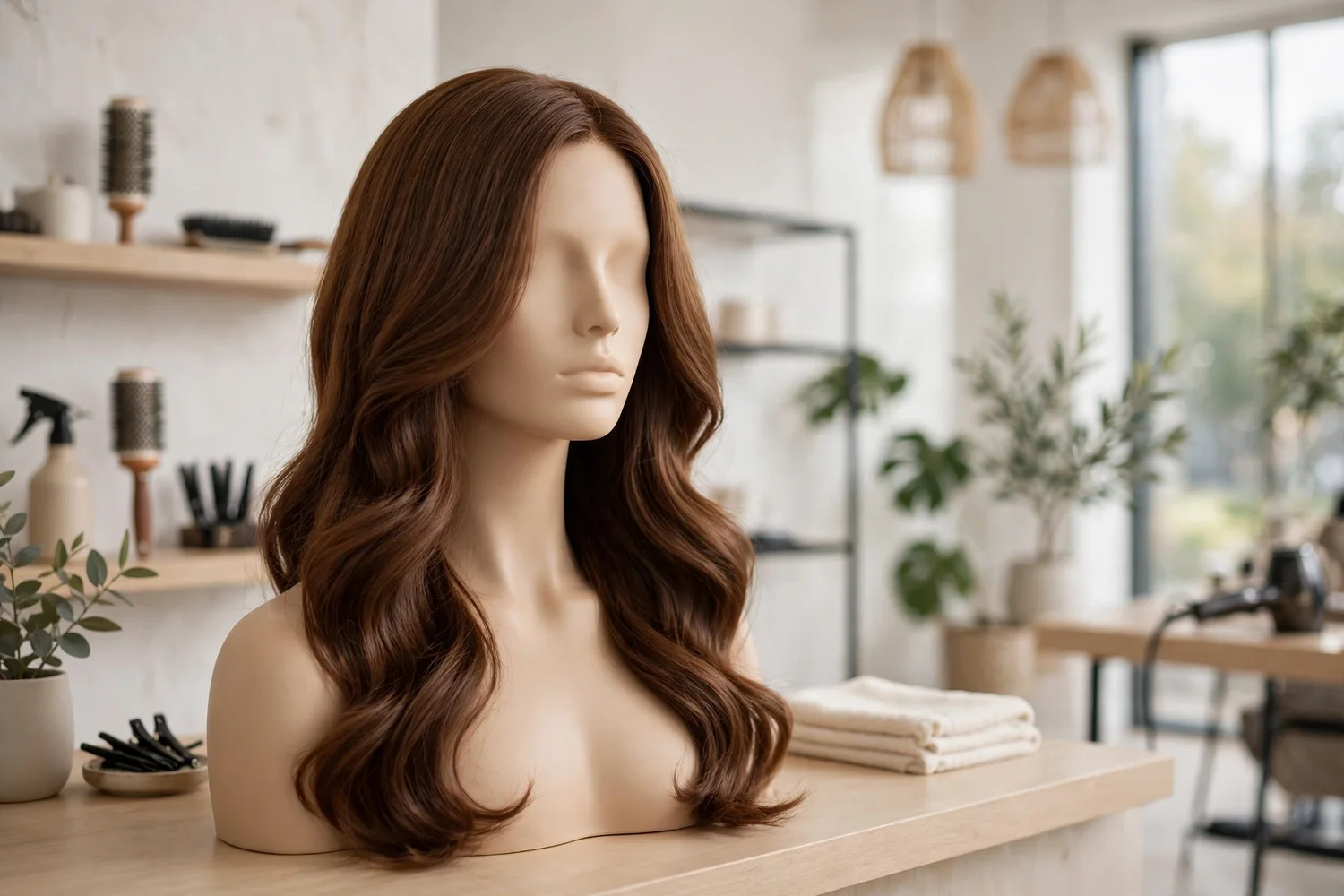
For many first-time buyers, synthetic wigs are the perfect place to start. They are affordable, widely available in up-to-date styles, and arrive pre-styled so you can wear them straight out of the box with almost no effort. If you have been wondering how synthetic wigs are made, how long they last, and whether one would suit your lifestyle, this beginner’s guide covers everything you need to know before you buy.
What are synthetic wigs made from?
Synthetic wigs are made from man-made fibres, most commonly types of polyester and acrylic that are engineered to look and move like human hair. Modern fibres are far more realistic than the shiny, stiff wigs of decades past. Manufacturers blend different fibre thicknesses and tones to imitate the variation in natural hair, and better-quality synthetic wigs use a softer, finer strand that reflects light in a much more natural way.
One important distinction is between standard synthetic fibre and heat-friendly synthetic fibre. Standard fibres cannot be styled with heated tools, because the heat will melt or frizz the hair. Heat-friendly fibres, sometimes called heat-defiant, can usually tolerate low to medium temperatures from straighteners and curling tools, which gives you more styling flexibility. Always check the manufacturer’s stated temperature limit, and test on a hidden section first.
If you are comparing wig types more broadly before you decide, our guide to the different types of wigs explained explains how synthetic options sit alongside human hair, lace front and other constructions.
The benefits of choosing a synthetic wig
The biggest advantage is price. A good synthetic wig costs a fraction of an equivalent human hair wig, which makes it practical to own more than one style. You can keep a polished look for work, a softer style for everyday wear, and something fun for evenings out, all for less than the price of a single premium human hair piece.
Synthetic wigs also hold their style. The fibre has a built-in “memory”, so after washing, the wig returns to its original shape with little more than a shake and air-drying. That makes them ideal if you want a low-maintenance routine, are going through a busy period, or simply do not enjoy styling hair. They are also an excellent low-risk way to experiment with a dramatically different colour or length, because if the look is not for you, the financial commitment is small.
For anyone who wants the easiest possible wear, combining a synthetic fibre with a beginner-friendly cap works beautifully, which is why our guide to glueless wigs for beginners is such a popular starting point.
How long do synthetic wigs last?
With everyday wear, a synthetic wig typically lasts around three to six months before friction, particularly around the nape and shoulders, begins to roughen the fibres. Worn occasionally and stored properly, the same wig can look good for much longer. Longer styles tend to show wear sooner because the ends rub against clothing, while shorter styles keep their condition for the longest.
You can extend the life of your wig by rotating between two styles, keeping it on a wig stand away from heat and sunlight, and following the correct washing routine. Our step-by-step guide on how to wash a synthetic wig shows exactly how to wash without damaging the fibres, and choosing the best shampoo for synthetic wigs helps prevent the build-up that makes synthetic hair look dull.
Choosing the right synthetic wig for you
Cap construction
The cap affects comfort and realism. A basic wefted cap is the most affordable and allows good airflow. A lace front creates a natural-looking hairline at the forehead, which matters if you like to wear your hair away from your face. A monofilament parting makes the part look like a real scalp. Many beginners find a lace front synthetic wig offers the best balance of realism and value.
Colour and style
Synthetic ranges are strong on colour choice, from natural shades with subtle highlights to bolds and pastels. If you are buying because of hair loss and want the closest match to your own hair, order colour swatches or compare shades in daylight where possible. Think about length honestly too: a style that brushes your shoulders is usually easier to manage than very long hair, especially in synthetic fibre.
Fit
Measure your head before ordering, following the sizing guide for the brand you are buying from, because average, petite and large caps vary between manufacturers. Most synthetic wigs include adjustable straps and ear tabs to fine-tune the fit. A wig that fits properly feels more secure, looks more natural, and is far more comfortable to wear all day.
Caring for your synthetic wig
Synthetic hair needs gentler handling than human hair in some ways, and simpler care in others. Wash it every six to eight wears, or sooner if it picks up odours or product build-up, using cool water and products made for synthetic fibres. Never use standard heated styling tools on a non-heat-friendly wig, and keep it away from oven heat, steam and open flames, which can singe the fibres instantly. Detangle gently from the ends upwards with a wide-tooth comb or a brush designed for wigs, never a standard hairbrush.
Between wears, store your wig on a stand to hold its shape, and refresh the style with a light mist of water or a synthetic-safe conditioning spray. Our full wig care guide brings all of these routines together in one place, whatever type of wig you own.
Common mistakes beginners make
A few simple errors can shorten a synthetic wig’s life. The most common is reaching for everyday hair products: standard shampoos, conditioners and styling sprays are too harsh and can coat the fibres, so always use products formulated for synthetic hair. Brushing a synthetic wig while it is wet is another frequent mistake, because wet fibres stretch and snap more easily; let it dry on a stand first. Finally, many beginners store their wig scrunched in a drawer or bag, which crushes the style and encourages tangling. A stand, or even a clean hook away from direct sunlight and radiators, keeps the shape intact between wears.
Is a synthetic wig right for you?
If you want an affordable, ready-to-wear style with minimal daily effort, a synthetic wig is hard to beat. They are especially well suited to first-time wearers, anyone who likes changing their look often, and people who need reliable hair quickly, for example during medical hair loss. Human hair wigs offer more styling freedom and a longer lifespan, but at a significantly higher price and with more maintenance. For most beginners, starting with a good synthetic wig is the sensible, confidence-building choice, and our guide on where to buy wigs rounds up reputable UK retailers when you are ready to shop.