
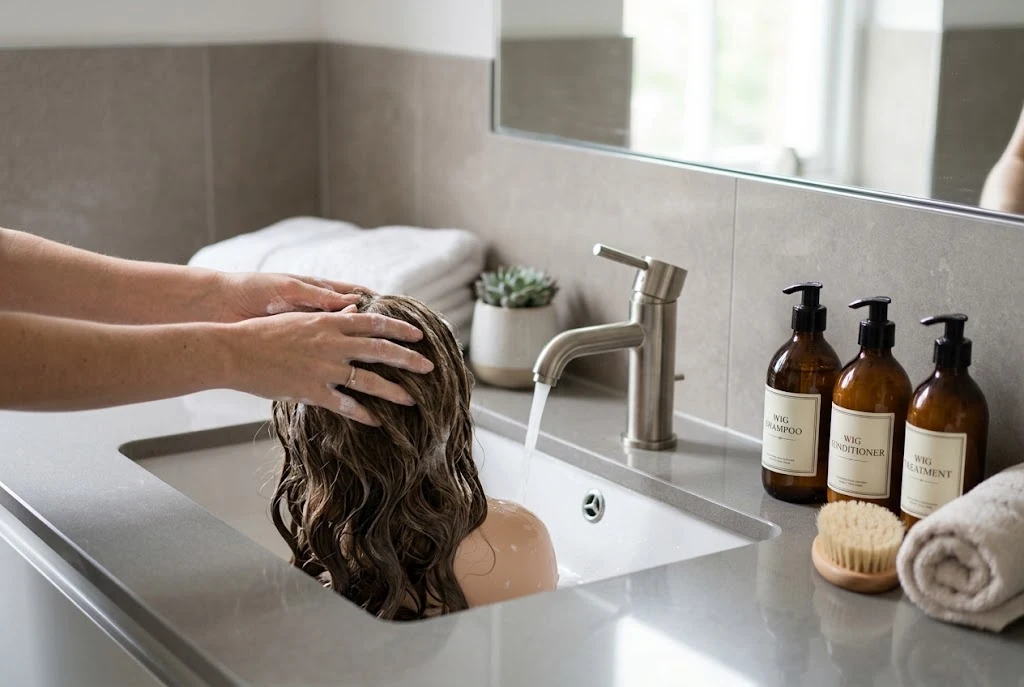
Knowing how to clean a wig correctly is one of the most important parts of maintaining its appearance, comfort and condition. Whether you wear a synthetic wig or a human hair wig, regular cleaning can remove sweat, dust, oils and styling-product residue that build up through everyday use.
However, wigs should not always be washed in exactly the same way as your natural hair. The fibre type, wig construction and manufacturer’s care instructions all affect the best cleaning method. Using the wrong products, excessive heat or rough handling can lead to tangling, frizz, fibre damage or changes to the original style.
This guide explains the basic principles of wig cleaning, from preparing the wig and choosing suitable products to washing, rinsing, conditioning and drying it safely.
How to Clean a Wig Safely
The best approach to how to clean a wig starts with identifying what type of wig you have. Synthetic wigs and human hair wigs have different characteristics and may require different products and techniques.
Before washing, always check the care instructions supplied with your wig. If the manufacturer recommends a particular shampoo, conditioner, water temperature or drying method, those instructions should take priority.
For most wig-cleaning routines, you will need:
- A suitable wig brush or wide-tooth comb
- A clean basin or sink
- Wig shampoo appropriate for the fibre
- A suitable wig conditioner or conditioning spray
- Clean water at the recommended temperature
- A clean, soft towel
- A wig stand for drying
Preparing everything before you start means you can minimise unnecessary handling once the wig is wet.
Step 1: Check the Wig Before Washing
Inspect the wig carefully before putting it into water. Look for areas where styling products, dust or other residue may have accumulated. Check the cap and construction as well as the visible fibres.
This is also a good opportunity to identify existing tangles. Do not immediately soak a heavily tangled wig and expect the water to solve the problem. Gentle preparation beforehand can make the entire cleaning process easier.
Step 2: Gently Detangle the Wig
Place the wig on a suitable stand or clean surface and gently remove tangles with a wig brush or wide-tooth comb. Start at the ends and gradually work towards the upper sections.
Avoid pulling a brush forcefully through knots. Instead, separate tangled areas into smaller sections and work through them carefully.
Long wigs can require particular attention because the ends experience more friction during wear. Gentle brushing before washing can help prevent those sections from becoming even more difficult to manage once wet.
Step 3: Choose the Right Wig Shampoo
Choosing the right cleanser is an important part of cleaning wigs. Ideally, use a shampoo specifically formulated for the type of wig you own.
Synthetic fibres should generally be washed with products intended for synthetic wigs. Human hair wigs may have their own specialist care requirements, so do not assume that a product suitable for synthetic fibres is automatically appropriate for human hair.
For synthetic styles, our guide to the best shampoo and conditioner for synthetic wigs explains how specialist products can support a gentler maintenance routine.
A dedicated wig cleaner or shampoo can help remove everyday build-up without requiring aggressive scrubbing. Always follow the directions provided with the product.
Step 4: Prepare the Water
Fill a clean basin with water at the temperature recommended by the wig manufacturer. Avoid automatically using hot water simply because it is common when washing natural hair.
Synthetic fibres can be particularly sensitive to heat. If you own a synthetic wig, check the manufacturer’s instructions carefully before washing it.
Water temperature is especially important when rinsing synthetic hair. If you want more detail about this part of the process, see our guide to what water temperature is used when rinsing a synthetic-hair wig.
Step 5: Wash the Wig Gently
Place the wig into the prepared water and apply the appropriate shampoo according to the product instructions. Allow the cleanser to work through the fibres without vigorous rubbing.
When you clean a wig, friction should be kept to a minimum. Avoid scrubbing the fibres together, twisting the wig into a ball or repeatedly running your fingers through tangled sections.
Instead, handle the wig gently and allow the shampoo to remove dirt and product residue. Pay attention to the inside of the cap as this area can come into contact with the scalp and collect sweat and oils.
Step 6: Rinse Thoroughly
After washing, rinse the wig thoroughly using the recommended water temperature. Make sure the shampoo has been removed before moving on to conditioning.
Do not wring or twist the wig to remove water. Wet fibres are more vulnerable to tangling, and aggressive handling can also put unnecessary strain on the wig cap.
Allow excess water to drain naturally and handle the wig with both hands where necessary to support its shape.
Step 7: Condition the Wig
Conditioning can help make a wig easier to manage, particularly after washing. However, the appropriate conditioner depends on the fibre type and manufacturer’s instructions.
For synthetic wigs, use a conditioner or conditioning spray specifically designed for synthetic fibres. Lightweight leave-in products can be useful for improving manageability without treating synthetic fibres like ordinary human hair.
For human hair wigs, follow the manufacturer’s recommendations because the hair may require a different conditioning routine.
Do not apply excessive product simply because the fibres feel dry. Too much product can create build-up and may make the wig feel heavy or difficult to style.
Step 8: Remove Excess Water
Once washing and conditioning are complete, gently support the wig and allow excess water to drain away. Place it on a clean towel and carefully blot the fibres.
Do not rub the wig between the towel or twist it to squeeze out water. Blotting is a much gentler approach and helps reduce unnecessary friction.
Step 9: Dry the Wig Correctly
Drying is just as important as washing. Place the wig on a suitable wig stand and allow it to air dry in a clean, well-ventilated area.
For many synthetic wigs, air drying is the safest option because excessive heat can alter the fibres or damage the style. Do not place a standard synthetic wig directly on a radiator or use a hot hairdryer unless the manufacturer specifically says that it is suitable.
Human hair wigs can have different styling requirements, so follow the instructions for your particular wig rather than applying a universal drying method.
How Often Should You Clean a Wig?
There is no single washing schedule that applies to every wig. The appropriate frequency depends on how often you wear it, your level of activity, perspiration, environmental exposure and the amount of styling product used.
A wig worn frequently may need cleaning more often than one worn occasionally. On the other hand, unnecessary washing means additional handling of the fibres, so cleaning should be based on the wig’s actual condition rather than an arbitrary timetable.
Signs that it may be time for wig cleaning include:
- Noticeable odour
- Visible product build-up
- Fibres that feel less manageable
- A dull or less fresh appearance
- Increased tangling caused by accumulated residue
Always consider the manufacturer’s recommended care schedule as well.
How to Clean Different Types of Wigs
Although the basic principles of wig cleaning are similar, the exact process can vary depending on the fibre.
Cleaning a synthetic wig
Synthetic wigs generally benefit from specialist synthetic wig shampoo, gentle handling and careful temperature control. Avoid treating the fibres like growing hair and never assume that ordinary heat-styling methods are safe.
If your wig is synthetic, our dedicated guide explains how to clean a synthetic wig step by step, including preparation, washing, rinsing and drying.
Cleaning a human hair wig
Human hair wigs can generally be treated more like natural hair than synthetic wigs, but they still require specialist care. The hair has been processed and attached to a wig construction, so excessive heat, rough brushing and unsuitable products can still cause damage.
Check whether your wig manufacturer recommends a particular shampoo, conditioner, drying technique or styling routine before washing.
Cleaning heat-friendly synthetic wigs
Heat-friendly synthetic fibres can tolerate certain heated styling techniques, but that does not mean every type of heat is safe. Temperature limits vary, so follow the manufacturer’s instructions carefully.
Heat-friendly fibres should still be washed and dried according to their specific care guidance.
Can You Use Regular Shampoo on a Wig?
It is better to choose a shampoo formulated for your particular wig rather than assuming that your everyday shampoo will be suitable.
Specialist wig shampoos are developed with wig fibres and construction in mind. They can form part of a more controlled maintenance routine, especially for synthetic wigs where ordinary hair products may not provide the desired results.
The same principle applies to conditioner. Choose a product designed for your wig type and follow its application instructions rather than using a large amount of standard conditioner.
Common Wig Cleaning Mistakes to Avoid
Several mistakes can make cleaning a wig more difficult or increase wear on the fibres.
Using very hot water
Excessive heat can be particularly problematic for synthetic fibres. Always follow the recommended temperature.
Scrubbing the fibres
Vigorous rubbing increases friction and can cause tangling. Gentle movement is usually sufficient.
Brushing aggressively when wet
Wet fibres can be easier to stretch and tangle. Unless the manufacturer’s instructions say otherwise, avoid aggressive brushing while the wig is wet.
Wringing the wig
Twisting or wringing can disturb the fibres and place unnecessary stress on the cap. Blot excess water instead.
Applying too many styling products
Heavy product build-up can make a wig look dull and increase the need for frequent washing. Use styling products sparingly and select products that are suitable for the wig.
How to Keep a Clean Wig Looking Fresh
Proper storage can make a significant difference after washing. Once the wig is completely dry, keep it somewhere clean and protected from excessive dust, humidity and friction.
A wig stand can help preserve the shape between wears. Handle the wig by the appropriate areas of the cap when putting it on or removing it, rather than repeatedly pulling on the fibres.
Regular gentle maintenance can also reduce the amount of intensive cleaning required. Detangle carefully, use appropriate products and avoid unnecessary heat.
If you need to build a complete care routine, exploring suitable wig shampoo and cleaning products can help you choose products that complement your particular wig.
When Should You Replace Your Wig-Care Products?
Wig-care products should be checked periodically just like other personal-care products. Follow the product’s storage instructions and pay attention to changes in its appearance, smell or consistency.
Using products that are specifically designed for your wig type is more important than collecting a large number of different treatments. A simple routine with the right shampoo, conditioner and detangling product can often be easier to maintain consistently.
Final Thoughts on How to Clean a Wig
Understanding how to clean a wig does not require a complicated routine. The most important principles are to identify the fibre type, use suitable products, control the water temperature, handle the fibres gently and allow the wig to dry correctly.
Always follow the manufacturer’s care instructions because synthetic, human hair and heat-friendly wigs can have different requirements. Avoid aggressive scrubbing, excessive heat, rough brushing and wringing the wig.
With the right approach to washing, conditioning, drying and storage, regular wig cleaning can become a simple part of your overall maintenance routine and help your wig remain comfortable, manageable and presentable for longer.